Looking for fresh new inspiration for your next OOTD? How about where to travel on your next vacation leave? Any trendy food to try in your free time? What current released gadgets and technologies can pique your interest? Worry no more because the metropolista has got you covered!
the metropolista delivers the latest news trends in the city! It has been our goal that this website provides fashion, travel, food, technology, news, and feature articles in the metro. So stay tuned for the following posts that keep you updated on the happenings around the metropolis!
The Philippine automotive aftermarket sector continues to evolve, and a new partnership between AISIN Philippines and NEXTHUB signals a significant step forward for the industry.
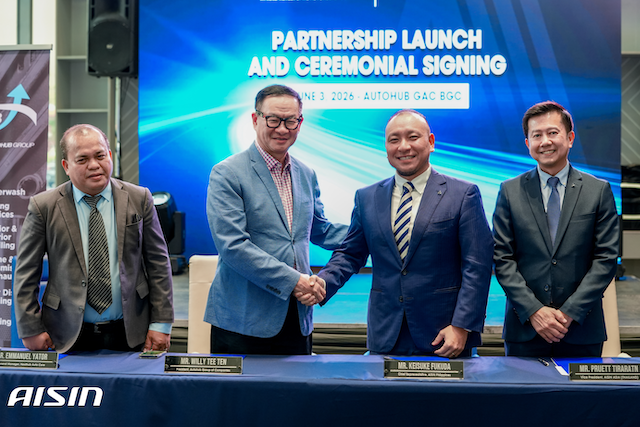
AISIN Philippines recently formalized a strategic collaboration with NEXTHUB, bringing together two organizations with a shared vision of elevating aftermarket services, strengthening industry support, and delivering greater value to automotive professionals and vehicle owners nationwide.
The partnership combines the strengths of AISIN, one of the world’s most respected original equipment manufacturers (OEMs), with NEXTHUB, a fast-growing aftermarket solutions provider backed by the expertise and extensive network of the AUTOHUB Group. Together, the two companies aim to create a stronger ecosystem for workshops, service centers, automotive businesses, and motorists across the country.
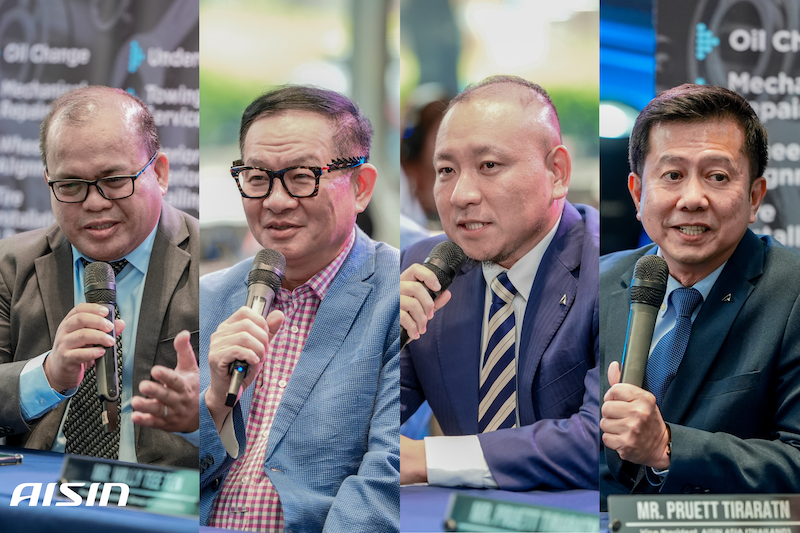
(L-R) Mr. Manny Yator – NEXTHUB General Manager, Mr. Willy Tee Ten – AUTOHUB Group President and CEO, Mr. Keisuke Fukuda – AISIN Philippines Chief Representative, and Mr. Pruett Tiraratn – AISIN ASIA Thailand Vice President
Bridging Global Expertise and Local Market Reach
For decades, AISIN has built a reputation as a trusted OEM supplier to leading vehicle manufacturers around the globe. Known for its commitment to quality, innovation, and reliability, the company continues to play a key role in advancing automotive technology and mobility solutions.
Through its partnership with NEXTHUB, AISIN seeks to extend that expertise beyond manufacturing and into the broader aftermarket landscape. By leveraging NEXTHUB’s market presence, operational capabilities, and deep understanding of local industry needs, both organizations are positioned to offer more comprehensive support to automotive professionals.
The collaboration is expected to strengthen the connection between global automotive standards and the evolving requirements of Philippine workshops and service facilities, helping ensure that businesses and consumers alike benefit from high-quality products and dependable aftermarket solutions.
Strengthening the Automotive Value Chain
As vehicle ownership continues to grow and motorists demand better service experiences, the aftermarket sector has become an increasingly important part of the automotive value chain.
AISIN’s latest move reflects its commitment to becoming more deeply integrated with the local aftermarket community. By working closely with NEXTHUB, the company aims to enhance engagement with workshops, service centers, technicians, and industry stakeholders, creating opportunities for long-term growth and development.
Beyond product availability, the partnership focuses on delivering value through technical expertise, customer support, and industry collaboration—areas that are becoming increasingly critical as vehicles become more technologically advanced.
Supporting Industry Development
A key component of the alliance is the commitment to professional development within the automotive sector. Both companies plan to support initiatives that include technical training programs, customer education efforts, and industry engagement activities designed to help automotive businesses improve their capabilities and service standards.
These programs are expected to equip workshops and service centers with the knowledge and resources needed to keep pace with changing vehicle technologies while enhancing the overall customer experience.
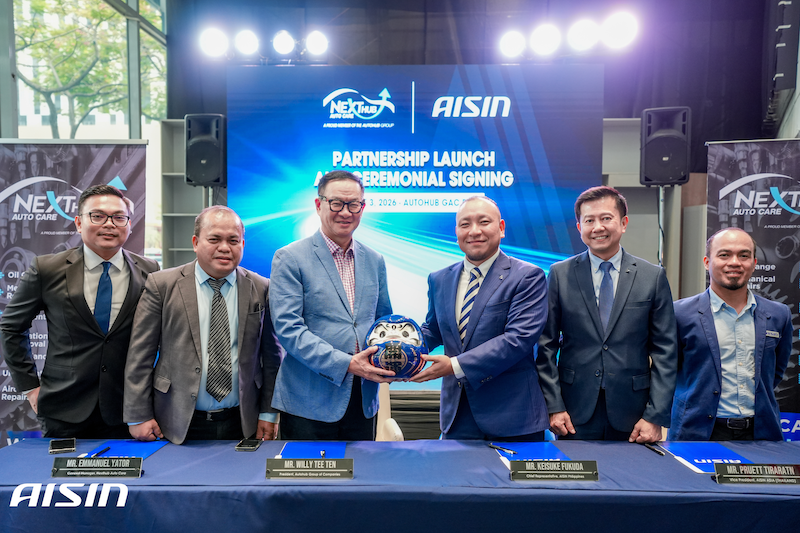
(L-R) Mr. Ralph Ducusin – AISIN Marketing Manager, Mr. Manny Yator – NEXTHUB General Manager, Mr. Willy Tee Ten – AUTOHUB Group President and CEO, Mr. Keisuke Fukuda – AISIN Philippines Chief Representative, Mr. Pruett Tiraratn – AISIN ASIA Thailand Vice President and Mr. Marlon Beraquit- AISIN Philippines Deputy Chief Representative
A Shared Vision for the Future
At its core, the AISIN-NEXTHUB partnership is built on a common goal: creating a stronger, more reliable automotive aftermarket industry in the Philippines.
By combining world-class OEM expertise with extensive local market reach, the collaboration aims to contribute to safer mobility, better vehicle ownership experiences, and sustained industry growth. As both organizations move forward together, the partnership underscores the increasing importance of strategic alliances in shaping the future of the country’s automotive aftermarket landscape.
For industry professionals and motorists alike, the collaboration represents more than a business agreement—it is a commitment to raising standards, expanding opportunities, and driving the Philippine automotive aftermarket toward a more dynamic and customer-focused future.
At a time of rising costs and economic uncertainty, freelancing has emerged as a growing source of opportunity. As more Filipinos turn to freelancing as a viable long-term career, many are adopting digital tools like the GCash Virtual US Account to simplify cross-border payments.
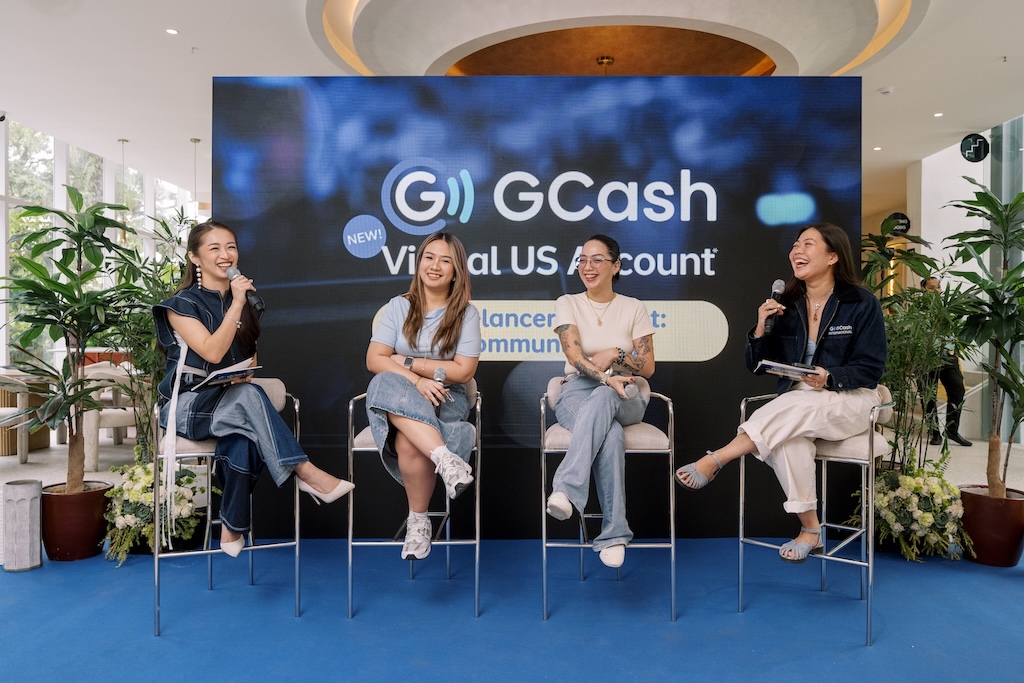
Panelists during the GCash Freelancer Connect in Pampanga (Host Steffi, Freelancers Kyla and Dani, and Sophia from GCash)
Recognizing this, the GCash Freelancer Connect, a series of community events designed to bring freelancers based in different cities in the country, made its way to Pampanga for its first regional leg. Attendees gathered to learn from speakers KD Creatives and Dani Jacobe, who led practical sessions on how to diversify income streams, charge more competitive prices, and build greater financial confidence with the support of tools like GCash. Here are key insights shared during the event:
Strong relationships create steady opportunities
With more Filipinos entering the freelancing industry, standing out has become a bigger challenge. For Dani Jacobe, building meaningful connections – and knowing how to communicate value clearly – makes all the difference.
“Your goal is not just to find one client. Your goal is to build a system that helps you keep finding and serving clients,” she shared.
What she has learned over the years is that outreach should go beyond simply introducing one’s services. Freelancers should learn to identify problems, offer clear solutions, and create opportunities for intentional conversations from the very beginning.
“Your skill becomes more valuable when you connect it to a specific business need,” she added.
Be confident in your worth
For Kyla Dizon, the journey to becoming “KD Creatives” didn’t happen overnight. Before building her online community around content creation and offering digital guides and advice through her platform, she experienced self-doubt and pressure as a young freelancer. One area where that hit hard was in communicating her value to potential clients.
“The truth is, a lot of freelancers are incredibly talented, but still undercharge because they haven’t fully recognized the value of what they bring to the table,” she explained.
The turning point came when she stopped pricing from a place of fear or being scared that clients would walk away because she’d be too expensive and instead began pricing from a place of confidence. But that confidence, Kyla noted, came only once she fully embraced her personal brand as a freelancer.
“Now, I approach pricing differently — not based on fear, but on the value and experience I know I can deliver,” she explained. During the Freelancer Connect, she urged attendees to use a pricing matrix, which she has made available online, to accurately determine how much they should charge clients for the services they offer.
Receiving payments should not feel complicated.
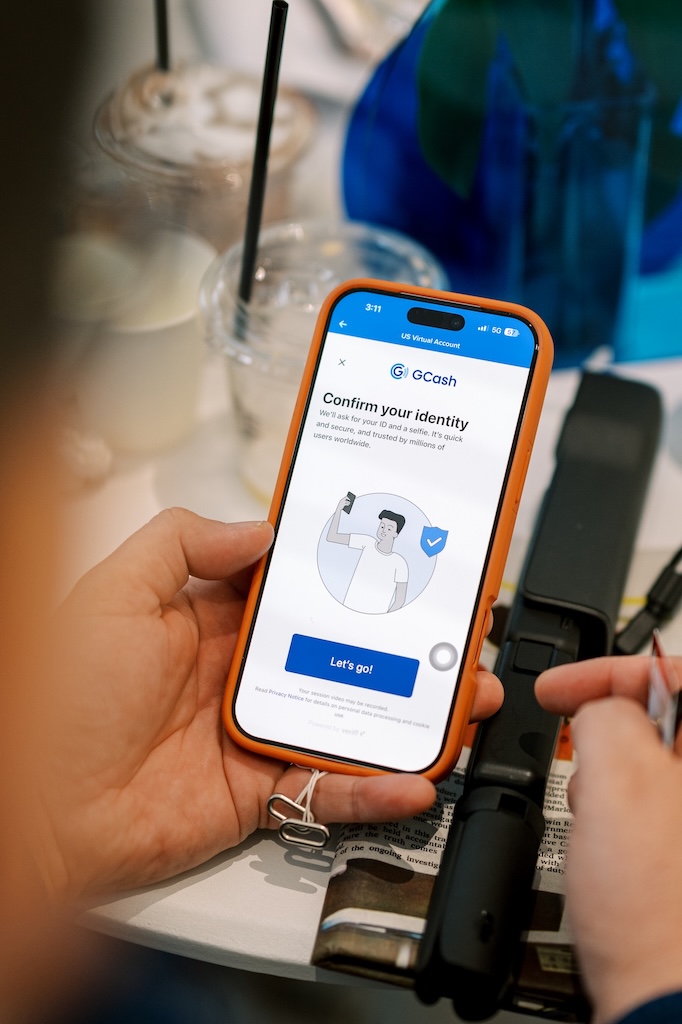
Another common challenge freelancers face is receiving payments, especially from overseas clients, where the process is often inefficient. To address this, GCash has introduced the Virtual US Account, a feature designed to make receiving USD payments easier.
Users can now receive USD transfers directly from US-based clients using their own routing and account numbers, similar to a traditional US bank, within the GCash app. This feature helps freelancers avoid unnecessary deductions, hidden fees, and lengthy transfer processes while also ensuring competitive forex rates. Users can convert their USD to PHP when it is most favorable for them – they have full control of when they want to withdraw it into their GCash e-wallet.
“We want to ensure that freelancers in the Philippines can receive and manage their money in the most convenient way possible and in a manner that ensures they don’t lose so much of their hard-earned cash. Once in your virtual US account, you can access and manage your earnings instantly inside the GCash app—whether that’s converting to PHP, paying bills, buying load, or even growing your wealth through our financial services,” shared Sophia Sison, Product Manager under the International Business Group at GCash.
Create your Virtual US Account today
As freelancing continues to grow across the country, GCash hopes initiatives like the Freelancer Connect can help create more spaces where freelancers feel supported—not just financially, but as a community navigating a rapidly changing world of work together.
Creating your virtual US account is easy:
Open the GCash app—Tap US Accounts in the Explore the App section
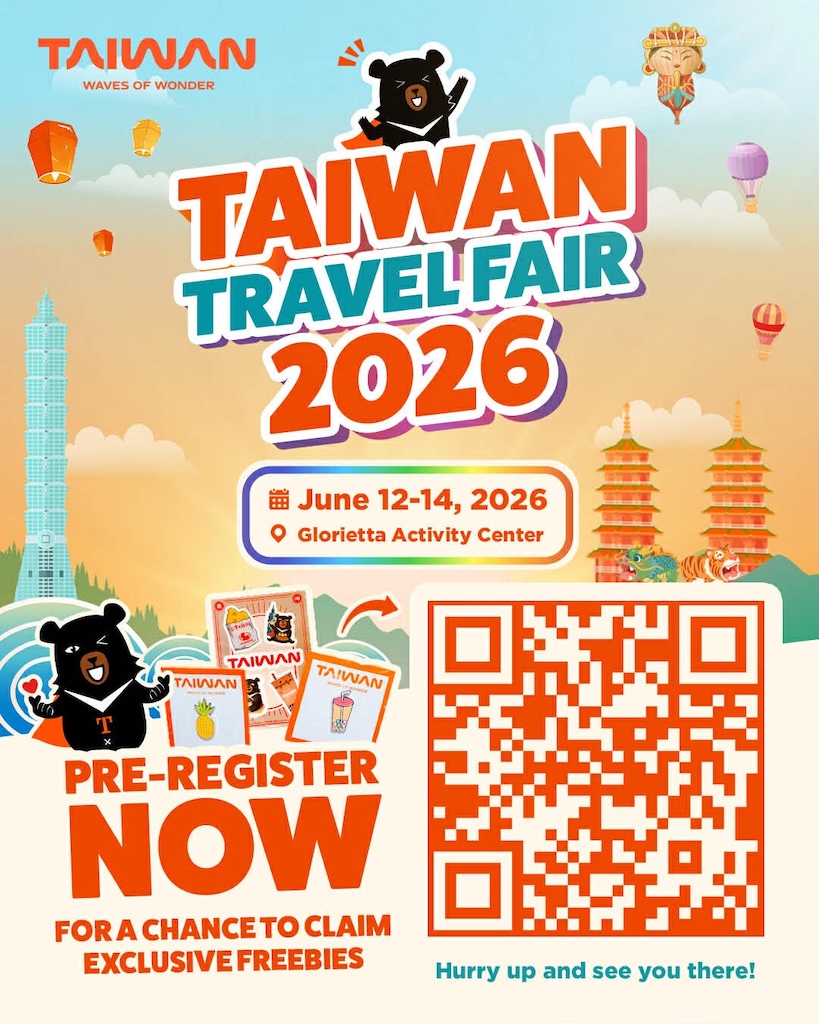
Filipinos are making history in Taiwan’s tourism industry. From January to March 2026, more than 210,000 Pinoy travelers visited Taiwan—a record-breaking 43% increase compared to last year. This surge officially places the Philippines at the top of Southeast Asia’s travel market for Taiwan, a milestone that the Taiwan Tourism Administration (TTA) is celebrating with big plans to keep the momentum alive.
To build on this success, the TTA is sending a 53-member delegation to Manila, representing airlines, local governments, theme parks, shopping centers, and travel agencies. Their flagship effort is the Taiwan Travel Fair, happening June 12–14 at Glorietta’s Activity Center in Makati. With the mall’s massive daily foot traffic, the fair is set to showcase Taiwan’s “Waves of Wonder” campaign through giant LED screens, immersive exhibits, and cultural experiences designed to capture Filipino hearts.
Visitors can step into Taiwan’s four-season charm, from the iconic Alishan Forest Railway to neon-lit street scenes. They’ll get hands-on with DIY workshops for Dragon Boat Festival sachets and lantern-themed ornaments, while food lovers can sip on Taiwan’s famous brown sugar bubble milk tea. The atmosphere will be kept buzzing with performances from Diabolo Walker, whose acrobatic diabolo routines blend music and movement, alongside interactive Zumba dance sessions that invite everyone to join in.
Social media will amplify the excitement, with influencers like Cocoy Lim and Rosie Domingo sharing their Taiwan adventures to spark curiosity among younger audiences. On-site perks make the fair even more irresistible: travelers who book packages can receive exclusive souvenirs, free five-day Taiwan SIM cards courtesy of Chunghwa Telecom, and even the chance to win round-trip tickets to Taipei or hotel vouchers. The event is expected to generate over NT$20 million in business opportunities, proving the strength of Taiwan’s integrated marketing approach.
Beyond the fair, the delegation will host two industry workshops — one in Makati on June 15 and another in Cebu on June 17 — bringing together more than 250 travel agencies, airlines, and media representatives. These sessions aim to deepen partnerships and expand tourism exchanges between the two countries.
The timing couldn’t be better. With the Philippines’ young population, growing middle class, and visa-free access to Taiwan, outbound travel demand is surging. Taiwan has quickly risen to become the fourth most popular destination for Filipino travelers. Social media trends highlighting Taiwanese cuisine, landscapes, railway adventures, and festivals have only amplified the appeal, especially among Gen Z and millennial audiences.
Looking ahead, the TTA plans to focus on four major themes—food, festivals, theme parks, and nature/ecotourism—to keep Filipino interest high. With so many cultural experiences, travel perks, and promotional events lined up, Taiwan is positioning itself not just as a destination but as a vibrant extension of Filipino travel dreams.
If there’s one trend that has stubbornly refused to slow down over the years, it’s cafe culture. In the Philippines, the coffee scene is brewing stronger than ever. With the foodservice sector projected to rise by 10% in 2026, small businesses—particularly independent coffee shops—are the main drivers of this caffeine-fueled boom.
But step behind the counter, and you’ll find a reality that doesn’t always make it to Instagram. Behind the stylish minimalist interiors, the curated playlists, and the perfectly poured latte art lies a massive hidden challenge: the immense pressure to operate efficiently.
Many coffee shop owners pour their hearts into getting their product right, but the operational side—the gears that keep the business running smoothly—often gets overlooked.
We took a trip to the country’s summer capital, Baguio City, to see how two local cafe owners are trading in their operational headaches for their “easy era” by upgrading their tech.
When Manual Systems Simply Can’t Keep Up
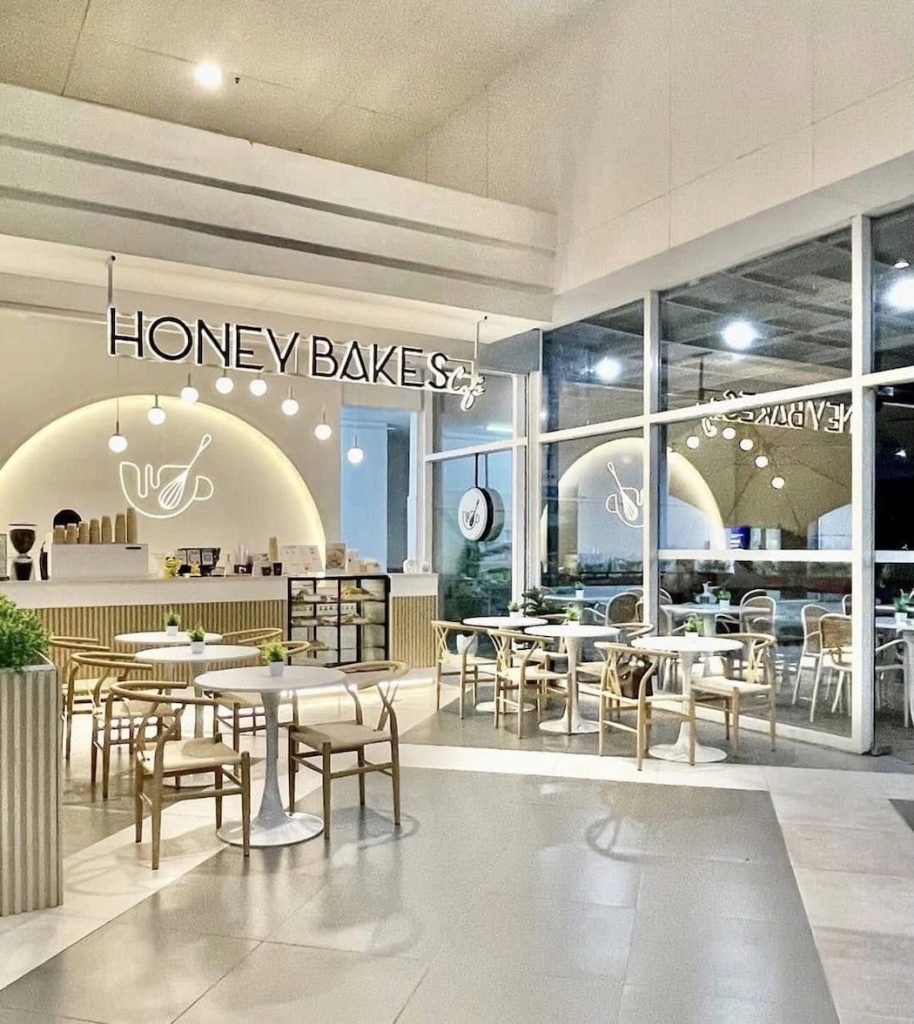
For Archie Villamor and his team at Honey Bakes Café Baguio, the biggest hurdle wasn’t baking the perfect pastry; it was the time-consuming manual processes that ate up their day.
“Before, we simply had a system of manually tracking cash flow and recording expenses daily. Each month, we summed up sales to determine if we had a positive net income,” Archie shares.
As the cafe grew, manual tracking became a heavy burden. To solve this, Archie partnered with GCash for Business. Today, his team uses the GCash for Business portal to track and manage all transactions in one centralized dashboard. It’s a massive time-saver for the staff, and the perks are hard to beat: there is no wallet limit for receiving cashless payments, and zero transaction fees when paying their suppliers.
Conquering the Peak Hour Rush
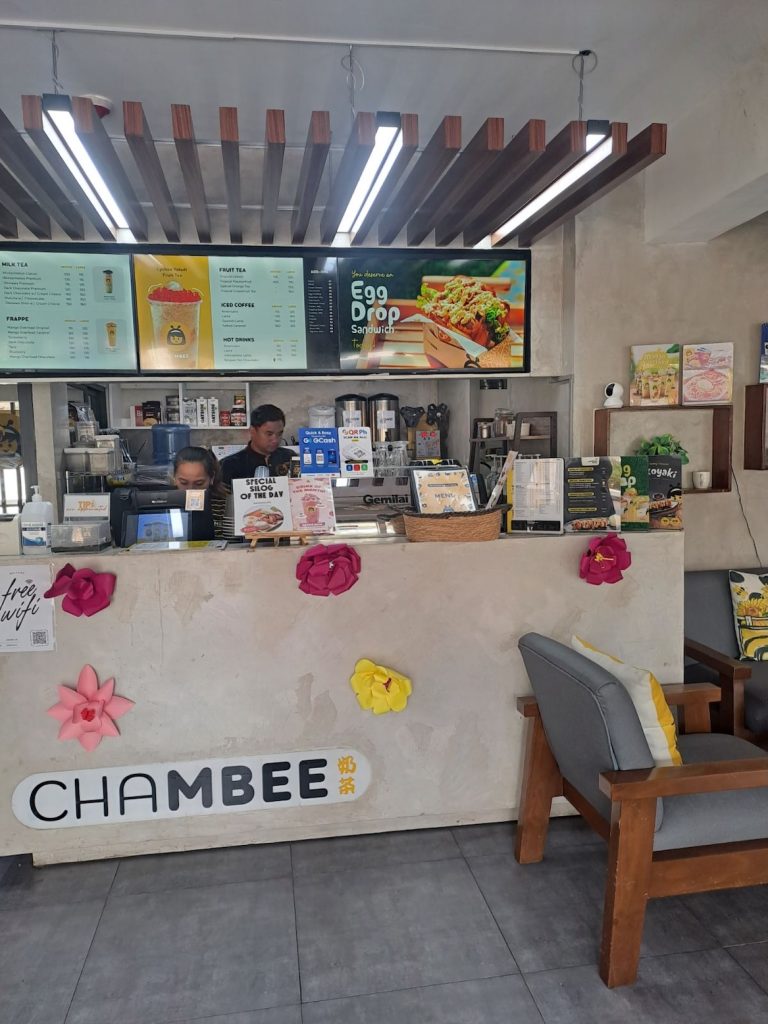
A few streets over at Chambee Ace Café, franchise owner Cynthia Tiplady was fighting a different battle: peak-hour bottlenecks.
Operating in Baguio means serving a wildly diverse crowd—from massive groups of tourists ordering in bulk to students and office workers in a frantic rush. When you’re dealing with that kind of foot traffic, every second counts.
“Before, we were using a mix of payment methods like bank transfers, QR codes, GCash, and cash,” Cynthia explains. Small delays, like staff manually verifying online transfers on their personal phones, were slowing operations down to a crawl. For a long time, the solution to this—enterprise-grade POS terminals—was completely out of reach for small businesses.
That changed with the GCash EasyPOS. This game-changing innovation allows Chambee Ace Café to accept all payment types—whether a customer wants to scan a QR code or tap a card—all from a single device. It instantly prints receipts and allows Cynthia to manage transactions, refunds, and reconciliation directly on the terminal itself.
Speeding Up the Checkout Line with SoundPay Plus
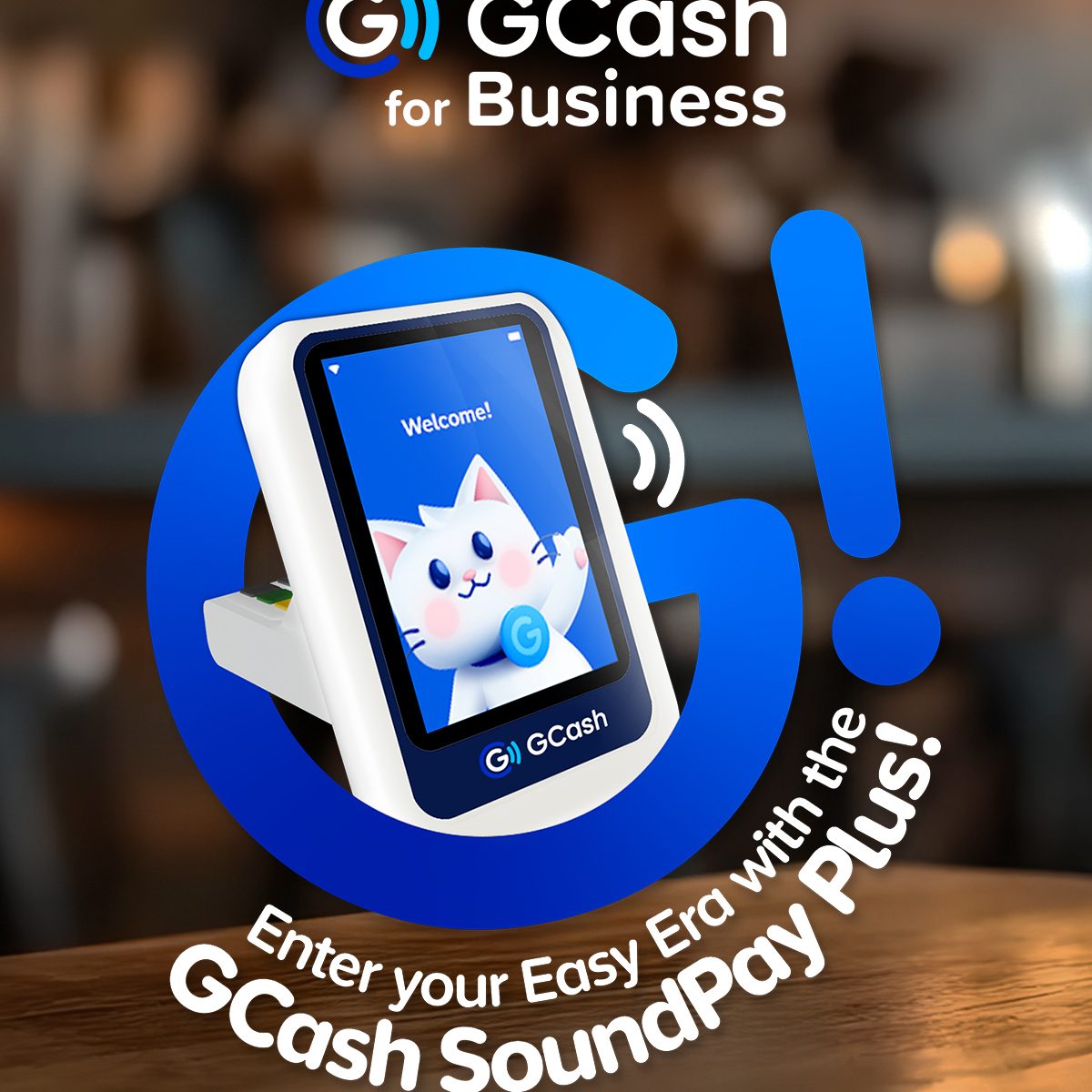
Back at Honey Bakes, Archie has also revolutionized his checkout counter with the new GCash SoundPay Plus.
This affordable, all-in-one payment device lets merchants accept QR, card, and tap-to-pay (NFC) transactions. The best part? It provides real-time voice confirmation. This means both the staff and the customer get instant audio verification that the payment was pushed through.
“Using GCash SoundPay Plus has sped up the long queues in our store,” Archie notes. “It has just made everything more convenient, secure, and overall easier for both our customers and our staff.”
By automating the checkout process, Archie’s team now has the time to focus on what actually matters: talking to customers, introducing new menu items, and ensuring every guest leaves happy.
Ready to Enter Your Business’s “Easy Era”?
As more people seek out memorable cafe experiences, business owners need to ensure their back-end operations can keep up with front-end demands.
If you’re a business owner looking to scale efficiently, you can be among the first to adapt the newest payment solutions from GCash for Business, including the GCash EasyPOS and GCash SoundPay Plus.
Here is how to get started:
Create an account on the GCash for Business Portal.
Apply as an official GCash merchant (you just need a verified GCash account active for at least 12 months to qualify for the Starter Plan).
Order your desired device, wait for the email confirmation, and look out for your delivery details!
Want to learn more about how to empower and scale your operations? Visit GCash for Business to explore their full suite of products tailored for growing enterprises.*
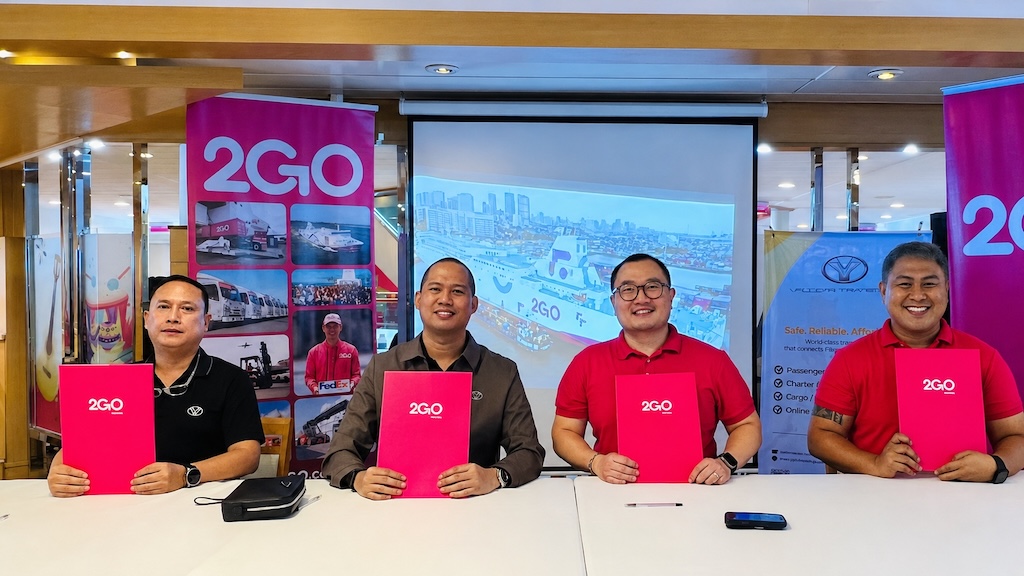
Travelling across the Philippines just got a whole lot easier. 2GO Travel, one of the country’s leading sea transport providers, has teamed up with Ceres Liner (Vallacar Transit, Inc.) to bridge the gap between ports and cities—giving passengers a smoother, more connected journey.
From Ship to Shuttle
No more scrambling for rides after disembarking! With this partnership, dedicated Ceres shuttle buses are now ready to pick up 2GO passengers straight from the port. The first rollout happened at Nasipit Port, linking travellers directly to Butuan City. Next stops? Cebu and Cagayan de Oro, making inter-island travel more convenient than ever.
Hassle-Free Reservations
Passengers can even reserve their shuttle seats onboard before docking. That means less waiting, better coordination, and a stress-free transfer from pier to terminal. It’s a simple but powerful move toward truly integrated travel.
Voices Behind the Partnership
Atty. Collin Derk Isidto, VP for Legal at Vallacar Transit, explains:
“This partnership strengthens access for passengers traveling to and from nearby provinces, making it easier for more Filipinos to connect to key ports and continue their journeys across islands.”
Meanwhile, Francis O. Chua, business unit head of 2GO Travel, highlights the bigger picture:
“We hope that through this collaboration, we enable not only regular travelers and groups, but also entrepreneurs and communities to access more destinations across the Philippines.”
Why It Matters
This isn’t just about convenience — it’s about connecting communities, boosting local economies, and opening doors for exploration. By syncing sea and land transport, 2GO and Ceres are building a travel ecosystem that’s reliable, efficient, and future-ready.
What’s Next?
The two companies are already eyeing more ports and terminals nationwide, so expect expanded routes soon. For now, travellers bound for Butuan can drop by the front office on board for shuttle arrangements.
With this move, 2GO and Ceres Liner are proving that travel isn’t just about getting from point A to point B—it’s about making the journey smoother, smarter, and more connected.
Gen Z is rewriting the rules of adulthood. They’re hustling on side gigs, chasing personal goals, and living authentically—but they’re also proving that financial protection isn’t just for “later.” It’s part of their now.
And in this fresh approach to securing the future, one name stands out: BDO Life.
Gen Z’s Top Insurance Choice
At the 2026 Synergy–YouGov Awards, BDO Life ranked No. 1 in Insurance Consideration, making it the top brand Gen Zs are eyeing for their next purchase. This recognition is backed by YouGov BrandIndex’s 2025 nationwide consumer tracking, which surveyed more than 3,000 Gen Z respondents daily.
That’s not just a win—it’s proof that insurance is becoming part of the Gen Z lifestyle.
A Message of Growth
“BDO Life is expanding its reach to support a broader range of breadwinners, including Gen Z. We appreciate how they value life insurance as a meaningful way to plan and secure their future. This milestone inspires us to keep growing alongside the evolving needs of future generations,” shared Shirlyn T. Book, BDO Life VP and Marketing Head, during the awards ceremony.
Her words capture the shift perfectly: insurance isn’t just a safety net anymore—it’s a Plan B for building a secure future.
Why This Matters
For younger generations, life insurance is no longer seen as something you buy when you’re older. It’s becoming a badge of responsibility and foresight, a way to balance ambition with protection.
BDO Life’s recognition shows that the brand isn’t just keeping up—it’s leading the way in making financial security relevant, relatable, and meaningful for Gen Z.
In short, Gen Z is proving that planning doesn’t mean slowing down—it means moving forward with confidence. And with BDO Life at the top of their list, the future looks not just secure, but empowered.