
Philippines Tops Southeast Asia in Taiwan Travel Boom

Filipinos are making history in Taiwan’s tourism industry. From January to March 2026, more than 210,000 Pinoy travelers visited Taiwan—a record-breaking 43% increase compared to last year. This surge officially places the Philippines at the top of Southeast Asia’s travel market for Taiwan, a milestone that the Taiwan Tourism Administration (TTA) is celebrating with big plans to keep the momentum alive.

To build on this success, the TTA is sending a 53-member delegation to Manila, representing airlines, local governments, theme parks, shopping centers, and travel agencies. Their flagship effort is the Taiwan Travel Fair, happening June 12–14 at Glorietta’s Activity Center in Makati. With the mall’s massive daily foot traffic, the fair is set to showcase Taiwan’s “Waves of Wonder” campaign through giant LED screens, immersive exhibits, and cultural experiences designed to capture Filipino hearts.

Visitors can step into Taiwan’s four-season charm, from the iconic Alishan Forest Railway to neon-lit street scenes. They’ll get hands-on with DIY workshops for Dragon Boat Festival sachets and lantern-themed ornaments, while food lovers can sip on Taiwan’s famous brown sugar bubble milk tea. The atmosphere will be kept buzzing with performances from Diabolo Walker, whose acrobatic diabolo routines blend music and movement, alongside interactive Zumba dance sessions that invite everyone to join in.

Social media will amplify the excitement, with influencers like Cocoy Lim and Rosie Domingo sharing their Taiwan adventures to spark curiosity among younger audiences. On-site perks make the fair even more irresistible: travelers who book packages can receive exclusive souvenirs, free five-day Taiwan SIM cards courtesy of Chunghwa Telecom, and even the chance to win round-trip tickets to Taipei or hotel vouchers. The event is expected to generate over NT$20 million in business opportunities, proving the strength of Taiwan’s integrated marketing approach.

Beyond the fair, the delegation will host two industry workshops — one in Makati on June 15 and another in Cebu on June 17 — bringing together more than 250 travel agencies, airlines, and media representatives. These sessions aim to deepen partnerships and expand tourism exchanges between the two countries.

The timing couldn’t be better. With the Philippines’ young population, growing middle class, and visa-free access to Taiwan, outbound travel demand is surging. Taiwan has quickly risen to become the fourth most popular destination for Filipino travelers. Social media trends highlighting Taiwanese cuisine, landscapes, railway adventures, and festivals have only amplified the appeal, especially among Gen Z and millennial audiences.

Looking ahead, the TTA plans to focus on four major themes—food, festivals, theme parks, and nature/ecotourism—to keep Filipino interest high. With so many cultural experiences, travel perks, and promotional events lined up, Taiwan is positioning itself not just as a destination but as a vibrant extension of Filipino travel dreams.


Beyond the Latte Art: The Unfiltered Truth About Running a Coffee Shop

If there’s one trend that has stubbornly refused to slow down over the years, it’s cafe culture. In the Philippines, the coffee scene is brewing stronger than ever. With the foodservice sector projected to rise by 10% in 2026, small businesses—particularly independent coffee shops—are the main drivers of this caffeine-fueled boom.

But step behind the counter, and you’ll find a reality that doesn’t always make it to Instagram. Behind the stylish minimalist interiors, the curated playlists, and the perfectly poured latte art lies a massive hidden challenge: the immense pressure to operate efficiently.

Many coffee shop owners pour their hearts into getting their product right, but the operational side—the gears that keep the business running smoothly—often gets overlooked.

We took a trip to the country’s summer capital, Baguio City, to see how two local cafe owners are trading in their operational headaches for their “easy era” by upgrading their tech.

When Manual Systems Simply Can’t Keep Up

For Archie Villamor and his team at Honey Bakes Café Baguio, the biggest hurdle wasn’t baking the perfect pastry; it was the time-consuming manual processes that ate up their day.

“Before, we simply had a system of manually tracking cash flow and recording expenses daily. Each month, we summed up sales to determine if we had a positive net income,” Archie shares.

As the cafe grew, manual tracking became a heavy burden. To solve this, Archie partnered with GCash for Business. Today, his team uses the GCash for Business portal to track and manage all transactions in one centralized dashboard. It’s a massive time-saver for the staff, and the perks are hard to beat: there is no wallet limit for receiving cashless payments, and zero transaction fees when paying their suppliers.

Conquering the Peak Hour Rush

A few streets over at Chambee Ace Café, franchise owner Cynthia Tiplady was fighting a different battle: peak-hour bottlenecks.

Operating in Baguio means serving a wildly diverse crowd—from massive groups of tourists ordering in bulk to students and office workers in a frantic rush. When you’re dealing with that kind of foot traffic, every second counts.

“Before, we were using a mix of payment methods like bank transfers, QR codes, GCash, and cash,” Cynthia explains. Small delays, like staff manually verifying online transfers on their personal phones, were slowing operations down to a crawl. For a long time, the solution to this—enterprise-grade POS terminals—was completely out of reach for small businesses.

That changed with the GCash EasyPOS. This game-changing innovation allows Chambee Ace Café to accept all payment types—whether a customer wants to scan a QR code or tap a card—all from a single device. It instantly prints receipts and allows Cynthia to manage transactions, refunds, and reconciliation directly on the terminal itself.

Speeding Up the Checkout Line with SoundPay Plus

Back at Honey Bakes, Archie has also revolutionized his checkout counter with the new GCash SoundPay Plus.

This affordable, all-in-one payment device lets merchants accept QR, card, and tap-to-pay (NFC) transactions. The best part? It provides real-time voice confirmation. This means both the staff and the customer get instant audio verification that the payment was pushed through.

“Using GCash SoundPay Plus has sped up the long queues in our store,” Archie notes. “It has just made everything more convenient, secure, and overall easier for both our customers and our staff.”

By automating the checkout process, Archie’s team now has the time to focus on what actually matters: talking to customers, introducing new menu items, and ensuring every guest leaves happy.

Ready to Enter Your Business’s “Easy Era”?

As more people seek out memorable cafe experiences, business owners need to ensure their back-end operations can keep up with front-end demands.

If you’re a business owner looking to scale efficiently, you can be among the first to adapt the newest payment solutions from GCash for Business, including the GCash EasyPOS and GCash SoundPay Plus.

Here is how to get started:

    1. Create an account on the GCash for Business Portal.
    2. Apply as an official GCash merchant (you just need a verified GCash account active for at least 12 months to qualify for the Starter Plan).
    3. Order your desired device, wait for the email confirmation, and look out for your delivery details!

Want to learn more about how to empower and scale your operations? Visit GCash for Business to explore their full suite of products tailored for growing enterprises.*

2GO x Ceres Liner: Making Travel Seamless Across Land and Sea

Travelling across the Philippines just got a whole lot easier. 2GO Travel, one of the country’s leading sea transport providers, has teamed up with Ceres Liner (Vallacar Transit, Inc.) to bridge the gap between ports and cities—giving passengers a smoother, more connected journey.

From Ship to Shuttle

No more scrambling for rides after disembarking! With this partnership, dedicated Ceres shuttle buses are now ready to pick up 2GO passengers straight from the port. The first rollout happened at Nasipit Port, linking travellers directly to Butuan City. Next stops? Cebu and Cagayan de Oro, making inter-island travel more convenient than ever.

Hassle-Free Reservations

Passengers can even reserve their shuttle seats onboard before docking. That means less waiting, better coordination, and a stress-free transfer from pier to terminal. It’s a simple but powerful move toward truly integrated travel.

Voices Behind the Partnership

Atty. Collin Derk Isidto, VP for Legal at Vallacar Transit, explains:

“This partnership strengthens access for passengers traveling to and from nearby provinces, making it easier for more Filipinos to connect to key ports and continue their journeys across islands.”

Meanwhile, Francis O. Chua, business unit head of 2GO Travel, highlights the bigger picture:

“We hope that through this collaboration, we enable not only regular travelers and groups, but also entrepreneurs and communities to access more destinations across the Philippines.”

Why It Matters

This isn’t just about convenience — it’s about connecting communities, boosting local economies, and opening doors for exploration. By syncing sea and land transport, 2GO and Ceres are building a travel ecosystem that’s reliable, efficient, and future-ready.

What’s Next?

The two companies are already eyeing more ports and terminals nationwide, so expect expanded routes soon. For now, travellers bound for Butuan can drop by the front office on board for shuttle arrangements.

With this move, 2GO and Ceres Liner are proving that travel isn’t just about getting from point A to point B—it’s about making the journey smoother, smarter, and more connected.

SM Expands Rewards Ecosystem with Trip.com Partnership, Unlocking New Travel Perks for Members

Travel just got more rewarding for SMAC members. The SM Group has taken another step in strengthening its lifestyle ecosystem by partnering with global travel platform Trip.com, offering members new ways to earn points while exploring destinations both local and abroad.

At the heart of this collaboration is a simple but appealing benefit: SMAC members can now earn 1 SMAC Point for every PHP250 spent on hotel and flight bookings made through Trip.com. These points will be credited within 60 working days after the completion of the trip—whether that’s after a hotel stay or a finished flight journey.

The move signals SM’s continued push to integrate everyday experiences—shopping, banking, travel, and more—into one seamless rewards-driven ecosystem.

Patrick Cua, Chief Operating Officer of SMAC

“Through strategic partnerships, both within and beyond the SM Group, we continue to enhance the value proposition for our members,” said Patrick Cua, Chief Operating Officer of SMAC. “This collaboration with Trip.com further expands our travel ecosystem, allowing members to earn rewards while accessing local and global destinations.”

Trip.com brings significant scale to the partnership. The platform operates across 39 countries and regions, supports 24 languages, and offers services in 35 currencies. Its network includes more than 1.5 million hotels, flights from over 640 airlines, and access to more than 300,000 tours and attractions across 220 countries and regions.

To take advantage of the offer, members need to log in to their SMAC account via the official website and access Trip.com through the SMAC homepage before completing any booking. It’s a small extra step that unlocks added value for frequent travelers and occasional vacationers alike.

This latest tie-up complements SMAC’s growing roster of travel and lifestyle partners, including Philippine Airlines’ Mabuhay Miles, AirAsia Rewards, and SM Hotels. Beyond travel, the program continues to expand into retail and financial services, with initiatives such as remittance rewards through SM Store and BDO.

As SM builds out its ecosystem, the goal is clear: to make everyday transactions more rewarding—whether you’re booking a flight, checking into a hotel, or simply going about your daily routine.

2GO, MinDA, and DCCCII Strengthen Partnerships to Boost Mindanao’s Economic Growth and Logistics Connectivity

DAVAO CITY, Philippines—March 23, 2025—Leading transportation and logistics provider 2GO recently brought together key industry leaders, government partners, and business stakeholders in Southern Mindanao to support a shared goal: driving economic growth through stronger partnerships and better logistics connectivity.

The event, titled “Advancing Mindanao’s Inclusive Growth through Stronger Partnerships and Sustainable Economic Progress,” served as a platform for collaboration among representatives from the Mindanao Development Authority (MinDA), the Davao City Chamber of Commerce and Industry, Inc. (DCCCII), and various sectors, including agribusiness, manufacturing, exporting, and logistics.

A Shared Vision for Growth

During the forum, participants discussed key regional priorities, logistics challenges, and opportunities to improve supply chain connectivity. These conversations are especially important for industries that rely heavily on efficient transport systems to grow and compete.

“Efficient logistics plays a critical role in connecting producers to markets and enabling industries to grow,” said Sharon Musngi-Ngo, Business Unit Head of 2GO Sea Solutions. She emphasized that closer collaboration between the government and the private sector will help businesses in Davao and across Mindanao expand their reach nationwide and globally.

Collaboration at the Core

A major highlight of the forum was the importance of public-private partnerships in strengthening infrastructure, improving market access, and supporting inclusive economic development.

“This meeting marks the beginning of a more purposeful collaboration between the private and public sectors,” said MinDA Executive Director Usec. Janet M. Lopoz. She noted that with 2GO’s expertise, logistical gaps can be addressed, allowing local industries to scale and compete in international markets.

Echoing this, Dr. Mirasol B. Tiu, President of DCCCII, stressed that stronger logistics systems can empower businesses of all sizes—from exporters to small enterprises—to grow and thrive.

Expanding Logistics Across Mindanao

2GO continues to expand its footprint in Mindanao, recognizing the region as a key driver of the Philippines’ future economic growth. The company currently operates in eight major ports, including:

    • Butuan (via Nasipit)
    • Cagayan de Oro
    • General Santos
    • Zamboanga
    • Dipolog (via Dapitan)
    • Ozamiz
    • Davao
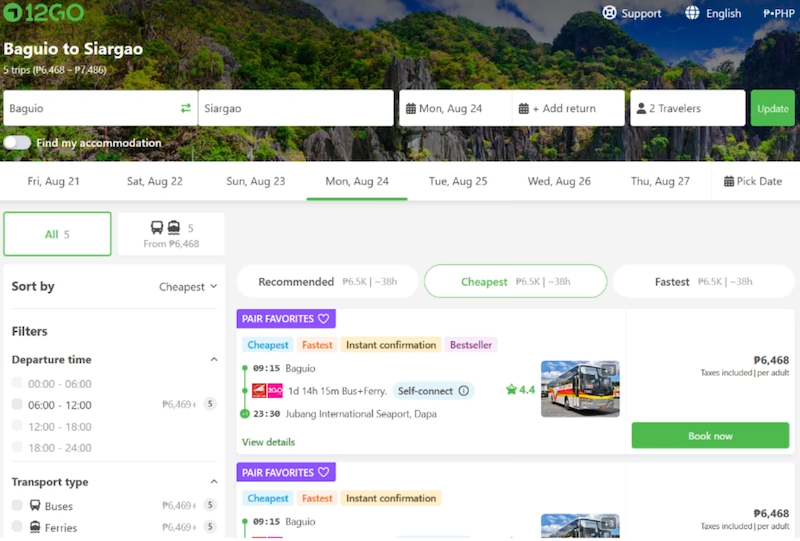
    • Siargao (newly added)

These locations help ensure smoother movement of goods and passengers, supporting the region’s growing economy.

Additionally, 2GO’s direct Manila–Davao passenger vessel route strengthens connections between Mindanao, Luzon, and the Visayas—further positioning Davao as a key logistics hub in the south.

A Legacy of Service and Innovation

With over a century of experience in maritime and logistics, 2GO offers a wide range of services through its four main business units:

    • 2GO Sea Solutions
    • 2GO Forwarding
    • 2GO Special Containers and Project Logistics
    • 2GO Travel

These services include sea freight, passenger transport, cold chain logistics, bulk liquid transport, warehousing, customs brokerage, and last-mile delivery—helping businesses move goods efficiently across the country.

Looking Ahead

As 2GO continues to work closely with partners like MinDA and DCCCII, the focus remains clear: improve logistics connectivity, expand market access, and support the long-term growth of Mindanao.

With stronger collaboration and better infrastructure, Mindanao is well on its way to becoming a more competitive and inclusive economic powerhouse in the Philippines.