

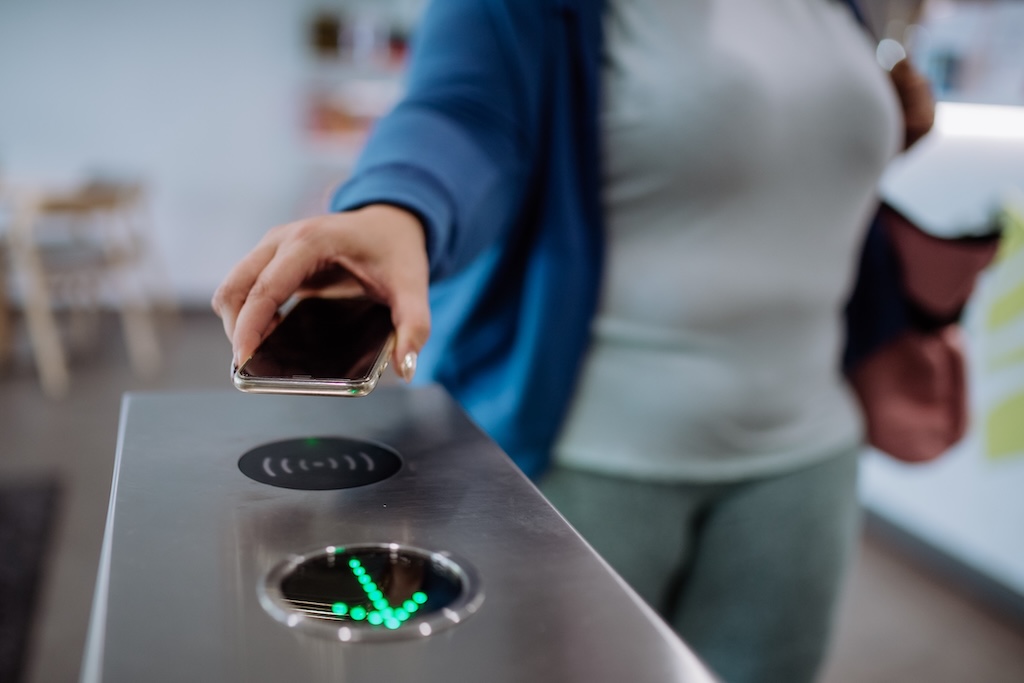
We’ve All Been There: When Your Train Card Runs Out—There’s a Convenient Alternative

In the middle of a busy morning, every second counts. For daily commuters, the day begins with a mission: beat the rush, stay on schedule, and get from point A to point B as smoothly as possible.

That’s why nothing triggers instant stress quite like this moment—you’re already in line, already running late, and then you realize your train card balance is running low.

Suddenly, it’s a scramble.

You start scanning the station for a top-up machine. You queue behind fellow commuters who are just as pressed for time. Sometimes the machines are slow—or worse, temporarily unavailable. Ticket booths get crowded as single-journey ticket buyers and card reloaders share the same line. What should have been a simple tap-and-go turns into a stressful delay.

During rush hour, even small inconveniences can derail your entire morning.

One Less Thing to Worry About—Thanks to GCash

Now imagine skipping that stress entirely.

With GCash, your phone—or your GCash Visa Card—can be your train ticket. No more second-guessing your balance. No more lining up just to reload. No more last-minute panic as the queue grows behind you.

And even on days when you need to cash in, it’s simple. You can CASH IN FOR FREE at GCash cash-in machines available across all MRT-3 stations, or transfer funds online from your bank account. With FREE Wi-Fi also available at MRT-3 stations, you can complete transactions on the spot—no mobile data needed, no detours required.

It’s convenience that fits seamlessly into your commute instead of disrupting it.

Three Hassle-Free Ways to Ride MRT-3 with GCash

Whether you prefer tapping your phone, scanning a QR code, or using a card, GCash gives you flexible options that match your lifestyle.

1. Tap to Pay Using Your Phone

Got an NFC-enabled Android phone? Your device can now double as your train pass.

Activation is quick and only needs to be done once:

    1. Open your phone’s Settings.
    2. Turn on the NFC feature.
    3. Log in to your GCash app.
    4. Select Tap to Pay and agree to the Terms & Conditions.

Once activated, simply log in to your GCash app and tap your phone at the turnstile upon entry. When you reach your destination, tap again at the exit gate—the exact fare will be automatically deducted.

Fast. Seamless. No extra steps.

2. Scan Your GCash Commute QR

No NFC? No problem.

You can generate a Commute QR code directly in the GCash app—no need to input station details.

Here’s how:

    1. Open the GCash app and tap Commute.
    2. Click Generate QR. You can download it or take a screenshot.
    3. Scan the QR code at the turnstile and proceed to the platform.

At your destination, scan the same QR code again at the exit gate, and the exact fare will automatically be deducted.

It’s your digital ticket—ready whenever you are.

3. Tap Your GCash Visa Card

Running low on battery? Experiencing spotty signal? Prefer using a physical card?

Your GCash Visa Card works just like the current train card system. Simply tap upon entry and tap again upon exit.

The GCash Visa Card is linked directly to your GCash wallet, allowing you to use it not only for MRT-3 rides but also for shopping at millions of online and offline stores. You can even withdraw from ATMs for as low as ₱10. All transactions are easily viewable in your GCash app’s Transaction History.

To get started:

    1. Tap Cards in the GCash app.
    2. Select Order a Card and input your delivery details (₱250 fee; delivery within 7–10 days), or choose Link my Card if you already have one.
    3. Enter the OTP and the required card details to complete linking.

Simple setup. Everyday convenience.

Convenience Is the New Self-Care

In a world where every minute is accounted for, convenience isn’t a luxury—it’s a form of self-care.

Skipping long lines. Avoiding unnecessary stress. Saving even a few precious minutes. These small wins can completely change the tone of your day.

With its growing daily usage, GCash has become a trusted payment option at MRT-3—making cashless commuting smoother than ever. Whether you tap, scan, or use your card, you’re not just saving time—you’re embracing a smarter, more innovative way to move through the city.

Ready to power up your commute?

Download the GCash app today via the Apple App Store, Google Play Store, or Huawei AppGallery—and make every ride a smoother one.

Love Is in the Air: A Sky-High Valentine’s Weekend at the Hot Air Balloon Fiesta in New Clark City

Imagine waking up before sunrise, the air still cool and quiet, when suddenly the sky begins to glow.

One by one, giant balloons bloom into color—reds, yellows, blues, and playful shapes—rising gently with the morning light. Cameras click. Music drifts through the breeze. Someone gasps. Someone else laughs. And just like that, love, wonder, and adventure float together overhead.

This February 13–15, 2026, the Philippine International Hot Air Balloon Fiesta (PIHABF) returns to New Clark City, Tarlac, bringing back the country’s longest-running and most beloved sky festival—just in time for Valentine’s weekend.

No passport needed. No overseas flight required. Just look up.

Three Days Where the Sky Comes Alive

For three unforgettable days, New Clark City transforms into a playground for dreamers, thrill-seekers, families, and couples looking for something a little more magical than the usual weekend date.

Hot air balloons take flight as early as 6:30 AM, painting the sunrise with drifting giants and soft flames. It’s the kind of moment that makes you pause mid-step, coffee in hand, simply to stare.

And that’s just the beginning.

Expect a festival packed with:

  • Drones and aerial tech showcases
  • Paragliding and paramotor stunts
  • Live music and entertainment
  • Car shows and drifting exhibitions
  • Food stalls and local finds
  • Family-friendly activities and kite flying

It’s part aviation showcase, part food fair, part music fest—and completely unforgettable.

A Valentine’s Date You’ll Never Top

If you’re planning something special for February 14, this might just be it.

Picture this: a romantic dinner under glowing hot air balloons, flames flickering against the night sky, live music filling the air, and the soft buzz of celebration all around you.

The Valentine’s Dinner experience (₱1,800 per person) offers couples an intimate evening of good food, warm lights, and that rare kind of atmosphere you can’t recreate anywhere else.

It’s not just dinner.
It’s a memory waiting to happen.

Not Just a Festival — A Front-Row Seat to the Future of Flight

Beyond the spectacle, the Fiesta is also where aviation fans get their fix.

The Aviation Seminar gives students, hobbyists, and professionals insider access to the latest in flying, safety, and innovation. It’s a chance to learn from industry experts and maybe even spark that childhood dream of taking to the skies yourself.

Meanwhile, cutting-edge attractions like the Kyxz Hoverbike demo offer a glimpse into what the future of personal flight might look like.

Yes, it’s as cool as it sounds.

Meet the Giants of the Sky

One of the most delightful parts of the Fiesta? The balloons themselves.

This year brings a parade of whimsical, larger-than-life characters making their Philippine debut—like Finley the Turtle, Tuca the Toucan, colorful Macaws, and even a Walrus floating overhead.

Fan favorites return too: from a flying Yoda to princesses, dragons, witches, and hearts drifting lazily across the sky.

Kids squeal. Adults turn into kids again. Everyone reaches for their phones.

It’s pure joy, floating 1,000 feet up.

Thrills Above and Below

If slow, dreamy balloon rides aren’t enough adrenaline for you, don’t worry.

The skies will also host:

  • Paragliding accuracy competitions
  • High-speed FPV drone races
  • Drone soccer battles

Down on the ground, expect roaring engines, drifting cars, bustling markets, and live performances that turn the evenings into a full-on celebration.

From sunrise to sundown, something’s always happening.

Plan Your Visit

The 26th Philippine International Hot Air Balloon Fiesta happens February 13–15, 2026 at New Clark City, Tarlac.

Ticket options:

  • ₱750 – General Admission
  • ₱1,000 – Admission + Aviation Seminar
  • ₱8,500 – VIP Pass

Available via HelixPay, SM Tickets, Klook, or on-site.

Some festivals you attend.

Others you remember for years.

This one?
You feel it the moment the first balloon rises and the sky turns into a dream.

So set that alarm early, bring someone you love (or just your sense of adventure), and let New Clark City show you what it looks like when love is truly in the air.

This event is made possible with the support of valued partners: Bases Conversion and Development Authority (BCDA), and New Clark City; FedEx as the Official Logistics Provider; Hann Resorts and Casino (Widus, Marriott and Swissotel) as Official Hotel Partner; NuStar Online as Lifestyle Gaming Partner; with Festival Friends – McDonald’s Philippines,  Converge, and Prulife UK; and Official Media Partners – BusinessMirror (Print Media Partner), PTV4, and Asian Air Safari.

Stay updated with schedules, announcements, and festival news at www.philballoonfest.net.  Follow the Fiesta on social media for sneak peeks and live updates: Facebook (www.facebook.com/pihabf), Instagram (https://instagram.com/philballoonfest), and TikTok (www.tiktok.com/@philballoonfiesta).

Seoul Snow Is Bringing a Korean Winter Wonderland to the Philippines

If you’ve ever dreamed of tasting winter in a cup, Seoul Snow might just be your next favorite stop.

This fast-rising Filipino brand is turning heads (and cooling down taste buds) with its authentic Korean snow bingsu—ultra-fine, milk-based shaved ice so soft and fluffy, it melts like fresh snow on your tongue. Think sweet, creamy, and refreshingly light—the kind of dessert that instantly transports you straight to the streets of Seoul.

And now, it’s not just one or two stores.
Seoul Snow is gearing up to open over 70 branches nationwide.

Yep—your Korean dessert fix might soon be right around the corner.

A Taste of Korea, with a Pinoy Twist

At the heart of Seoul Snow’s menu is its signature snow-like texture, made possible by specialized machines that create impossibly fine shaved ice. It’s smoother than traditional halo-halo and lighter than ice cream—basically the best of both worlds.

The flavors? Comforting, playful, and very Instagram-worthy.

Originals

  • Choco Cheese Snow

  • Strawberry Cheese Snow

  • Ube Cheese Snow (a clear local favorite!)

New Flavors

  • Coco Peanut Snow

  • Melon Cheese Snow

  • Seoul Snow Original

Prices stay budget-friendly too, ranging from PHP 49 to PHP 179, making it an easy treat whether you’re a student, barkada, or family out on a mall day.

From Cavite to the Rest of the Country

Seoul Snow’s journey started just recently, opening its pioneer branch in Cavite in November 2025. Not long after, it popped up in Fora Mall, Tagaytay, quickly attracting curious dessert lovers and K-culture fans.

And they’re just getting started.

Coming soon are branches in:

  • Davao (Segue Building)

  • Robinsons Las Piñas

  • Pure Ride Makati

Plus planned openings in Marikina, Antipolo, Baliwag, and Malate.

By early 2026, the brand is set to roll out over 70 stores nationwide—a rapid expansion that demonstrates the strong demand for this popular Korean treat.

More Than a Dessert—A Business Opportunity

Beyond serving sweet snow cups, Seoul Snow is also carving a name in the franchise scene.

Designed for aspiring entrepreneurs, the business model focuses on:

  • simple operations

  • compact kiosk setups

  • standardized systems

  • controlled costs

With franchise packages starting at PHP 299,000 and a projected 2–3 month ROI, it’s positioned as an accessible entry point for those looking to start a food business—especially fans of Korean culture who want to turn their love for bingsu into something bigger.

Your Next Cool Craving

Whether you’re chasing dessert after dinner, hanging out with friends, or simply looking for something new to try, Seoul Snow offers a sweet little escape—a Korean winter wonderland in every spoonful.

And with dozens of branches on the way, you won’t have to travel far to get your snow fix.

Follow Seoul Snow on social media to catch the next store opening near you.

Trust us—this is one trend you’ll want to chill with. ❄️🍧

Taiwan Woos Filipino Travelers at Phil Travel Expo with Visa-Free Access and Round-the-Clock Safe Adventures

Bright lanterns, night market aromas, scenic mountain railways, and streets that feel safe even past midnight—this is the Taiwan being introduced to Filipino travelers today.

At the Philippine Travel Expo in Manila, Taiwan made a confident and heartfelt pitch: visiting the island has never been easier, safer, or more exciting.

Leading the charge is one simple but powerful invitation — visa-free travel.

A Door Opened Wider for Filipinos

During the event’s opening, Ting-Sheng Lee, Deputy Representative of the Taipei Economic and Cultural Office (TECO), underscored how the Taiwan–Philippines Reciprocal Visa Exemption has transformed travel between the two destinations.

What used to require paperwork and waiting now takes little more than a plane ticket and a passport.

For many Filipinos, that means spontaneous getaways, quicker family visits, and smoother business trips.

“The visa exemption has made travel easier and more accessible,” Lee shared. “It allows people from both sides to build stronger personal connections and a deeper appreciation of each other’s cultures.”

And the impact goes beyond tourism.

Entrepreneurs can now fly in for trade shows and exhibitions with ease. Students can join academic exchanges. Creatives can collaborate across borders. In short, Taiwan isn’t just opening its doors — it’s building bridges.

A Destination That Never Sleeps — Safely

For Filipino travelers, safety and convenience often top the checklist. Taiwan is leaning into both.

Ease Huang, Deputy Director-General of the Taiwan Tourism Administration, highlighted the country’s growing reputation as a 24/7 destination, where exploration doesn’t stop when the sun goes down.

Think bustling night markets, late-night food crawls, illuminated city streets, and public transport that keeps running smoothly.

“Safety, flexibility, and memorable experiences matter to Filipino visitors,” Huang said. “Taiwan’s well-regulated night markets, reliable public transport, and walkable, well-lit cities allow travelers to enjoy nightlife, food, and cultural activities with confidence.”

It’s a big draw, especially for young travelers and barkada trips who want to maximize every hour of their vacation.

Taiwan consistently ranks among the safest places in Asia, thanks to low crime rates and a strong culture of public order—something that gives travelers that extra peace of mind when exploring after dark.

Why Taiwan Feels Like Home

According to Cindy Chen, Director of the Taiwan Tourism Information Center Manila (TTIC), interest from Filipinos has steadily grown in recent years.

And it’s not hard to see why.

There’s the food — comforting bowls of beef noodles, endless milk tea variations, street snacks at every corner.
There’s the accessibility — efficient trains, easy-to-navigate cities.
And there’s the vibe — a warm mix of tradition and modern creativity that feels familiar yet fresh.

“Filipinos are drawn to Taiwan’s accessibility, food culture, safety, and variety of experiences,” Chen explained. “We help make travel planning easy through itineraries, travel information, and partnerships with airlines, tour operators, and media.”

From cultural festivals to scenic countryside escapes, Taiwan offers something for every type of traveler — whether it’s a family trip, solo adventure, or quick weekend break.

More Than a Trip, It’s a Connection

At its core, Taiwan’s presence at the Philippine Travel Expo wasn’t just about promoting destinations. It was about strengthening ties.

With visa-free entry, safe and lively cities, and deeper cultural exchanges, Taiwan is positioning itself as more than just another spot on the map — it’s becoming a neighbor that feels closer than ever.

For Filipino travelers looking for their next international adventure, Taiwan might just be the easiest “yes” they’ll make this year.

Pack light. Bring your appetite. And maybe save some room for milk tea. 🇹🇼✈️

Addressing the Brain Drain: How the SM Group Is Bringing Higher Education Back to the Regions

For decades, many Filipinos have left their hometowns in search of quality education and better career opportunities—often concentrating talent in urban centers while leaving provincial communities underserved. Today, the SM Group, through National University (NU), is helping reverse that trend by bringing accessible, high-quality higher education closer to home.

With a growing presence outside Metro Manila, National University is not only educating students—it is creating jobs, nurturing local talent, and strengthening regional economies.

Expanding Access Beyond Metro Manila

National University now serves more than 84,000 students across its nationwide campuses, with seven campuses located outside Metro Manila. These include NU Bacolod, NU Laguna, NU Baliwag, NU Dasmariñas, NU Lipa, NU Clark, and the newest campus, NU Cebu, which opened this academic year.

What stands out is NU’s strong commitment to local employment. NU Cebu currently boasts 100% local hires, while NU Bacolod employs 96% local staff, NU Laguna 99%, NU Baliwag 98%, NU Dasmariñas 96%, NU Lipa 98%, and NU Clark 97%. These numbers highlight NU’s deliberate effort to provide professional opportunities within the regions they serve.

By offering quality education and employment in provincial areas, NU allows professors, administrators, and students to build meaningful careers without leaving their hometowns.

Standardized Compensation, Stronger Talent Retention

One of NU’s key strategies in addressing brain drain is its standardized compensation package across all campuses nationwide. This approach ensures competitive and equitable salaries regardless of location, making provincial postings more attractive to educators and professionals.

“We bring talent back to the provinces,” said NU President and CEO Dr. Renato Carlos Ermita. “NU offers a standardized salary matrix applicable to all our employees across the country. This approach has helped make our recruitment more appealing to applicants in provincial regions.”

NU President and CEO Dr. Renato Carlos Ermita

By aligning education, labor, and development goals, NU helps reduce inequality between urban and rural areas—strengthening local ecosystems for long-term growth.

Education as a Catalyst for Community Development

NU’s expansion also reflects the SM Group’s vision of responsible community development. Most NU campuses are situated within SM’s social ecosystem, offering students and employees accessibility, safety, and convenience.

“NU is part of SM’s corporate social responsibility,” Dr. Ermita shared. “By allowing campuses to be part of the SM community, accessibility is achieved and affordability is maintained. Transportation hubs are also located near most mall-based campuses, ensuring convenience and safety for students and employees.”

This integrated approach helps communities retain educational talent while reinforcing access to social and economic opportunities.

Coming Home: Stories from NU Cebu

At NU Cebu, the impact of this mission is deeply personal. One of the campus’ returning locals is Executive Director Johanna Minglana, who shared how the opening of NU Cebu allowed her to return home after decades in Manila.

“NU Cebu allowed me to come full circle in my birthplace while continuing my academic career,” Minglana said. She noted that many faculty and staff share similar sentiments—finding purpose in meaningful work without being separated from their families and communities.

According to Minglana, NU Cebu represents more than an academic institution. “It embodies SM’s vision of being a catalyst for community development. It creates jobs not only within the university but also for surrounding businesses—from food establishments and boarding houses to transportation and retail.”

Building the Future, Locally

As National University recently marked its 125th founding anniversary, thousands of alumni gathered to celebrate its legacy and continued commitment to providing world-class, life-ready education. Whether in urban centers or provincial communities, NU remains focused on preparing graduates to thrive wherever opportunity takes them.

By bringing higher education to the regions, NU and the SM Group are proving that talent doesn’t have to leave home to grow—and that meaningful development begins by investing in communities where people already belong.

Gawad Alunig x Dalumat: Steady Champions of Homegrown Ingenuity

DOST-TAPI’s annual campaign elevates Filipino innovations and the voices that propel them

Since 2022, the Technology Application and Promotion Institute under the Department of Science and Technology (DOST-TAPI) has been amplifying Filipino ingenuity through the Gawad Alunig x Dalumat (GAxD).

Developed at a time when the Philippines was reeling from the global pandemic, this national campaign leveraged the power of storytelling to highlight homegrown technologies. It also served as a response to the proliferation of disinformation and misinformation, particularly with various misconceptions and false claims on science and technology.

2022 – 2024: Empowering Science Stories through Citizen Journalism

The pilot GAxD campaign in 2022 focused on excellence in Citizen Science Journalism. Gawad Alunig spotlighted the Best KALIPUNAN Science Youth Correspondents who produced engaging newscasts. On the other hand,  Gawad Dalumat honored outstanding school-based science publications.

Tapping into the value of grassroots storytelling, the inaugural GAxD generated close to 500 invention leads and contributed to a 25% increase in DOST-TAPI’s approved funding proposals.

For the second edition, GAxD maintained the same citizen science journalism format but further evolved into a nationwide campaign to encourage innovators that could join the  Regional Invention Contest and Exhibit (ClusteRICE).

 That year’s campaign focused on the critical contribution of science and technology in major sectors of society, from agriculture, education, livelihood, health, disaster management, and engineering. By contextualizing innovation within real-world issues, GAxD contextualized the relevance of science and technology in daily life.

In 2023, the Public Relations Society of the Philippines (PRSP) honored the DOST-TAPI’s GAxD campaign with a Silver Anvil Award under the Specialized PR Program Category. Further, Marketing-Interactive Philippines also recognized the campaign with a Gold Award for Excellence in Relationship Marketing.

In addition to these triumphs, the campaign sparked a 200% surge in invention proposals and the nationwide production of dozens of science newscasts and publications—clear evidence of community-driven storytelling’s impact.

Building on the campaign’s award-winning momentum, GAxD was deliberately structured to generate proposals for its third edition in 2024. Cash awards were increased to strengthen participation.

The 2024 campaign spotlighted the technologies focused on Tech-Trans, small businesses, and Medium-sized Enterprises (MSMEs). It further strengthened journalistic standards in science reporting among student publications while intensifying public engagement on issues vital to nation-building.

2025: Empowering Innovation Stories through Creative Advertising

 The latest GAxD edition marked a new chapter with a strong emphasis on science visual storytelling through creative advertising. Through this shift, DOST-TAPI aims to open opportunities for more Filipino storytellers to join the conversation and amplify community ingenuity.

Moreover, stakes are higher than ever with prizes of up to PHP 75,000 for the Gawad Alunig (Audio-Visual Category) grand winner and PHP 60,000 for the Gawad Dalumat (Photo Essay Feature Category) champion.

For more information about the GAxD campaign, please visit TAPI.DOST.gov.ph and follow DOST-TAPI on Facebook. To learn more about GAxD, you may email DOST-TAPI at impakt.tipd@tapi.dost.gov.ph or contact DOST-TAPI’s mobile number 09082447842 (available on Viber or WhatsApp).

The Department of Science and Technology – Technology Application and Promotion Institute (DOST-TAPI) is among the DOST’s service agencies tasked to promote technology commercialization and innovation support services, created under the Executive Order No.128 on 30 January 1987.

For more information about DOST-TAPI’s programs and services, you may email info@tapi.dost.gov.ph, call (02) 8582 1450 loc. 2167, or visit the official DOST-TAPI Facebook page at https://www.facebook.com/DOST.TAPI.